


Top Books On Career Success
Some of my favorite books on career success, career advice and career management are from the “Harvard Business Review on …” series.
I like them because they are written by thought leaders in their fields. A lot of these have become classics in the management/leadership field. The “Harvard Business Review on …” series are made up of a series of articles that are organized into a book. That makes it easy to read and digest.
I also benefited tremendously from reading books written by objective thinkers like Richard Carlson, Peter Drucker, Robert I. Sutton, Daniel Goleman and Herminia Ibarra.
Here are my highly recommend picks for you.
Bringing Your Whole Self to Work
You're making a living. But are you having a life? If not, you're putting yourself at risk for burnout--and your company at risk for lowered performance from you and your team. To stay productive on the job, you need to bring your whole self to work--balancing professional and personal commitments and safeguarding your emotional, physical, and psychological health.
This series gives you the insights, tools, and practices you need to do all that.
Articles in this book include:
1. Overloaded Circuits: Why Smart People Under Perform
2. The Human Moment At Work
3. The Corporate Athlete
4. Are You Working Too Hard
5. Sleep Deficit: The Performance Killer
6. Decisions And Desire
7. Leading By Feel
8. The Dangers Of Feeling Like A Fake
A must-have resource for staying productive and healthy on the job.
Managing Your Career
A collection of reflective articles walks readers through tough career challenges--from effective time management to part-time arrangements to launching a new career.
Articles in this book include:
1. Reawakening Your Passion For Work
2. Goodbye Career, Hello Success
3. The Right Way To Be Fired
4. Managing Oneself
5. A Second Career: A Possible Career
6. Five Strategies Of Successful Part-Time Work
7. Managing Your Boss
8. A Survival Guide For Leaders
Managing Yourself
Before they can effectively manage others, managers have to be adept at managing themselves. That requires truly understanding their own passions and motivations, strengths and weaknesses. This guide offers sage advice from business greats, including Peter F Drucker and John P Kotter, on how managers can improve personal performance and productivity and in the process, become better managers of those they lead.
Articles in this book include:
1. Almost Ready: How Leaders Move Up
2. Overloaded Circuits: Why Smart People Under Perform
3. What’s Your Story?
4. How To Play To Your Strengths
5. Do Your Commitments Match Your Convictions?
6. The Best Advice I Ever Got
7. Managing Your Boss
8. Managing Oneself
Becoming a High-Performance Manager
With offerings ranging from the timeless classic "Management Time Who's Got the Monkey" to innovative, cutting edge ideas, this book provides busy managers with strategies for more effective time and stress management, and offers insights into what a manager's job really entails. This is a must read for any professional wanting to work more effectively and become a better manager.
Articles in this book include:
1. Management Time: Who's Got The Monkey?
2. Beware The Busy Manager
3. What Effective General Managers Do
4. The Making Of A Corporate Athlete
5. Managers Can Avoid Wasting Time
6. All In A Day's Work
7. The Very Real Dangers of Executive Coaching
8. Saving Your Rookie Managers from Themselves
The No Asshole Rule
We all know them or know of them--the jerks and bullies at work who demean, criticize, and sap the energy of others, usually their underlings. It could be the notorious bad boss or the jealous coworker, but everyone agrees that they make life miserable for their victims and create a hostile and emotionally stifling environment.
Fed up with how these creeps treat others and poison the workplace, Sutton declares war and comes out calling them exactly what they are--"certified assholes." Caricatured in sitcoms such as The Office, these brutes are too often tolerated until irreparable damage is done to individuals and the organization as a whole.
Sutton's "no asshole rule" puts a stop to the abuse in no uncertain terms. Similar rules have transformed such companies as JetBlue, the Men's Wearhouse, and Google into shining examples of workplaces where positive self-esteem creates a more productive, motivated, and satisfied workforce. If you have ever been a victim, just reading Sutton's analysis brings calm relief, empowerment, and reassurance that you're not alone.
Don't Sweat The Small Stuff
Best-selling author Richard Carlson, Ph.D., shows readers how to interact more peaceably and joyfully with colleagues, clients, and bosses and reveals tips to minimize stress and bring out the best in themselves and others.
This is a must-read book for anyone in a stressful work environment. It teaches us how to cope better in work-related difficulties, as well as in our personal life.
Harvard Business Review on Leadership
From experienced CEOs to newly-minted managers who've just stepped into a supervisory role, leadership is a perennial concern for anyone who needs to motivate, guide, and inspire. This collection of eight of the Harvard Business Review's most influential articles on leadership brings together authors who challenge many long-held assumptions about the true sources of power and authority in today's businesses.
Articles in this book include:
1. The Manager's Job: Folklore and Fact (Henry Mintzberg)
2. What Leaders Really Do (John P. Kotter)
3. Managers and Leaders: Are They Different? (Abraham Zaleznik)
4. The Discipline of Building Character (Joseph L. Badaracco, Jr.)
5. The Ways Chief Executive Officers Lead (Charles M. Farkas and Suzy Wetlaufer)
6. The Human Side of Management (Thomas Teal)
7. The Work of Leadership (Ronald A. Heifetz and Donald L. Laurie)
8. Whatever Happened to the Take-Charge Manager (Nitin Nohria and James D. Berkley)
Harvard Business Review on Breakthrough Leadership
This collection features an all-new roundtable discussion with a unique "closing essay" on followership. The collection also builds on the special leadership issue of Harvard Business Review.
Key topics and articles in this book include:
1. Personel Histories
2. Primal Leadership
3. Leadership
4. Followership
Harvard Business Review on What Makes a Leader
The latest thinking in the field of leadership is collected in this volume. With all-new articles published in the last three years and two articles from leadership guru, Daniel Goleman, this collection is a must have for CEOs and top level managers. The volume also pays special attention to leadership succession issues.
Articles in this book include:
1. Narcissistic Leaders: The Incredible Pros, the Inevitable Cons (Michael Maccoby)
2. Leadership That Gets Results (Goleman)
3. Getting the Attention You Need (Thomas H. Davenport and John C. Beck)
4. The Successor's Dilemma (Dan Ciampa and Michael Watkins)
5. The Rise and Fall of the J. Peterman Company (John Peterman)
6. Why Should Anyone Be Led by You? (Robert Goffee and Gareth Jones)
7. Leading Through Rough Times: An Interview with Novell's Eric Schmidt" (Bronwyn Fryer)
Working Identity: Unconventional Strategies for Reinventing Your Career
Aimed at mid-career professionals who have invested much in careers that may no longer fully satisfy, Ibarra's book challenges the traditional belief that a meticulous assessment of one's skills and interests will automatically lead one to discover the right job.
In reality, she argues, "doing comes first, knowing second." This is not to say that a marketing director should abruptly resign to become a modern dancer; instead, defining the arc of the future is a "never-ending process of putting ourselves through a set of knowable steps that creates and reveals our possible selves."
Most people will navigate a career shift at some point in their lives, and in this smart, positive guide, organizational behavior professor Ibarra shares the stories of 23 people who did it successfully. It's no 10-point plan for figuring it all out, Ibarra says, but rather a well-reasoned guide to making the decision of whether or not to stay in a career or move on. Readers who study the stories and their accompanying analyses will take away some valuable lessons on changing their way of thinking and being, going out on a limb, and building in a much-needed "transition period" during a career shift.
First Things First
What are the most important things in your life? Do they get as much care, emphasis, and time as you'd like to give them? Far from the traditional "be-more-efficient" time-management book with shortcut techniques, First Things First shows you how to look at your use of time totally differently. Using this book will help you create balance between your personal and professional responsibilities by putting first things first and acting on them. Covey teaches an organizing process that helps you categorize tasks so you focus on what is important, not merely what is urgent. First you divide tasks into these quadrants:
1. Important and Urgent (crises, deadline-driven projects)
2. Important, Not Urgent (preparation, prevention, planning, relationships)
3. Urgent, Not Important (interruptions, many pressing matters)
4. Not Urgent, Not Important (trivia, time wasters)
Most people spend most of their time in quadrants 1 and 3, while quadrant 2 is where quality happens. "Doing more things faster is no substitute for doing the right things," says Covey. He points you toward the real human needs--"to live, to love, to learn, to leave a legacy"--and how to balance your time to achieve a meaningful life, not just get things done.
Good Boss Bad Boss
Want to be a better boss? Unaware that you're a terrible one? Sutton (The No Asshole Rule) is here to help. The cost of callous and cruel superiors is considerable: employees with an abusive boss are more likely to work slowly, make deliberate errors, and even suffer heart attacks.
With examples from such diverse workplaces as Pixar and Anchor Steam brewery, Sutton reveals how the best bosses take diverse and intertwined steps to create effective and humane workplaces, and offers tips on taking control, getting and giving credit appropriately, taking responsibility, staying in tune with employees, and squelching your potential inner jerk.
Using real-life examples and insight gleaned from 30 years of experience as a manager, Sutton teaches his readers to become the boss employees enthusiastically want to work for. This entertaining, satisfying guide is a wakeup call for bosses everywhere--and a survival guide for those who work for them.
101 Great Ways to Enhance Your Career
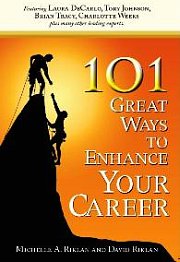
3 years ago, I was invited to participate as a contributing author together with 100 other career experts to create a book called 101 Great Ways to Enhance Your Career. In my chapter, Work Attitude, I discuss how you need to define your attitude at work as critical step to career success. You will be getting career advice up close an personal from some of the best people in their fields like Brian Tracy.
101 Great Ways to Enhance your Career Today!
Over 100 of the World's Leading Career Experts have joined together to give you the complete collection of 101 insider secrets that show you how to instantly and positively enhance your career! In this new book, experts including Tory Johnson, Laura DeCarlo, Brian Tracy, Charlotte Weeks, Long Yun Siang will give you quick, simple and proven Career secrets. To learn more about this special offer go here: 101 Great Ways to Enhance your Career
Learn & Grow: Join Our Newsletter
What's Hot
Every month, we bring you new articles based topics suggested by you. We hope to be able to give you tips and suggestions, and provide answers to your questions that you will find helpful.
Being Happy at Work – 6 Tips to Be Happy at Work
Create Time – How To Get More Time In Your Day at the Office
Pursue Your Dreams – 7 Things to Keep in Mind and Do
Great Day at Work – How to Achieve a Happy Day at Work
Release Your Tension – How to Feel Relax Before Going to Work
Powerful Words That Keep You Motivated at Work


Start Here: The Newbies Guide
If you are new to this site and don't know where to start, start here by reading our most read articles.
Definition of Success?
How To Get Promoted
Define Your Attitude
Why Is Time Management Important?
Work Attitude Behavior & Work Behavior Attitude?
What Job Suits Me?
Attitude At Work: When People Don’t Like You
Positive Thinking In The Workplace
Personal Goal Setting
How To Find Your Dream Career
Positive Attitude in The Workplace
Define Leadership
How To Move Up The Corporate Ladder
Developing Leadership Skills At Work
Developing Positive Attitude At Work