


Definition of Low Self-Esteem in Relation to Your Work
I started to look into the definition of low self-esteem when I had to grapple with staff confidence in general. In my opinion, some of them were skilled and knowledgeable but their performance did not seem to match their skills. I wondered if it had to do with their self-esteem.
Probably the most practical definition of self-esteem I have read is by The National Association for Self-Esteem. The National Association for Self-Esteem defined self-esteem as "The experience of being capable of meeting life's challenges and being worthy of happiness."
This definition breaks self-esteem into two components – the sense of Competency and Worthiness and the relationship between these two components. This definition allowed me to deduce the definition of low self-esteem and how to handle it.
1. The Sense of Competency
To understand the definition of low self-esteem, let us then first understand the competency component of self-esteem. The best way to understand this component is that it relates to the behavioral section. This is “what we do.” Hence, having a sense of competency means having the conviction and confidence to do the tasks at hand and achieving the intended results.
2. The Sense of Worthiness
The second thing to do to understand the definition of low self-esteem is to understand the component of worthiness of self-esteem. I made the common mistake like many people until I saw this definition. Worthiness is not about simply feeling good about oneself. It involves feelings like finding relevance in things that foster personal growth and making the commitment to these goals that gives one a sense of satisfaction. This then is the attitude and belief section of self-esteem. It is the “what we think and feel.”
Now, Why Do I Find This Definition of Self-Esteem Practical?
As a manager, in order to address a particular challenge I needed to diagnose the problem as clearly as possible. This definition made me realize that maybe it isn’t so much as to understand the definition of low self-esteem, rather the components that make up healthy or unhealthy self-esteem.
1. Unhealthy Self-Esteem In Your Workplace
Let’s remove whatever preconceived notion you have on the definition of low self-esteem you may have now. Given that you know the two components of self-esteem, the relationship of the two components founded on reality gives you healthy self-esteem.
Consider the relationship between these two components and how it exists in your workplace. If someone has a wrong perception of his or her competency, without a sense of worthiness - this will result in boastfulness. A healthy sense of worthiness balances the competency component by focusing the person on values of the goal.
The same is true when the balance is flipped. Someone with a strong sense of worthiness but who is not competent will be filled with self-importance. A healthy sense of competency in this situation ensures that the person knows good feeling is to be earned not given.
2. Healthy Balance
Thus a healthy self-esteem is one where the two components have a healthy balance or relationship. It is grounded in reality. If you feel you or your team mates suffer from low self-esteem perhaps take another look at the components that make up a healthy self-esteem.
For workplace purposes, I find this definition of self-esteem more practical than the definition of low self-esteem. This is because it allows one to work on components that may not be low self-esteem but unhealthy self-esteem that can be counter productive in the workplace.
| More Articles About Self-Esteem |
How to Gain Confidence : At Work and In Life
Let’s begin with focusing on these essential 9 steps first to gain confidence.
Positive Self-Esteem Development In The Workplace
The need for positive self-esteem development in the workplace isn’t necessary a sign of weakness.
How to Overcome Low Self-Esteem for Career Success
Suffering from low self-esteem can impede your chances of career success. So, how to overcome low self-esteem?
Symptoms of Low Self-Esteem in the Office
Inevitably, we will work with some people who suffer with low self-esteem. Or we may suspect that we may suffer from low self-esteem ourselves. Do you know the symptoms to spot them?
How To Build Self-Esteem – A Quick Guide to Self Improvement
New ideas for building your self esteem and self confidence at work.
Self-Esteem Improvement for Career Newbies: 5 Quick Tips
5 quick tips to self-esteem improvement for career newbies.
What is the Definition of Low Self-Esteem?
If you suspect you suffer from low self-esteem, spend some time looking into the definition of low self-esteem to understand and overcome it.
101 Great Ways to Enhance Your Career
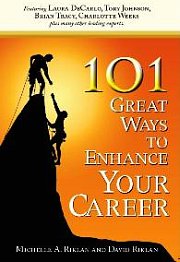
3 years ago, I was invited to participate as a contributing author together with 100 other career experts to create a book called 101 Great Ways to Enhance Your Career. In my chapter, Work Attitude, I discuss how you need to define your attitude at work as critical step to career success. You will be getting career advice up close an personal from some of the best people in their fields like Brian Tracy.
101 Great Ways to Enhance your Career Today!
Over 100 of the World's Leading Career Experts have joined together to give you the complete collection of 101 insider secrets that show you how to instantly and positively enhance your career! In this new book, experts including Tory Johnson, Laura DeCarlo, Brian Tracy, Charlotte Weeks, Long Yun Siang will give you quick, simple and proven Career secrets. To learn more about this special offer go here: 101 Great Ways to Enhance your Career
Learn & Grow: Join Our Newsletter
What's Hot
Every month, we bring you new articles based topics suggested by you. We hope to be able to give you tips and suggestions, and provide answers to your questions that you will find helpful.
Being Happy at Work – 6 Tips to Be Happy at Work
Create Time – How To Get More Time In Your Day at the Office
Pursue Your Dreams – 7 Things to Keep in Mind and Do
Great Day at Work – How to Achieve a Happy Day at Work
Release Your Tension – How to Feel Relax Before Going to Work
Powerful Words That Keep You Motivated at Work


Start Here: The Newbies Guide
If you are new to this site and don't know where to start, start here by reading our most read articles.
Definition of Success?
How To Get Promoted
Define Your Attitude
Why Is Time Management Important?
Work Attitude Behavior & Work Behavior Attitude?
What Job Suits Me?
Attitude At Work: When People Don’t Like You
Positive Thinking In The Workplace
Personal Goal Setting
How To Find Your Dream Career
Positive Attitude in The Workplace
Define Leadership
How To Move Up The Corporate Ladder
Developing Leadership Skills At Work
Developing Positive Attitude At Work