


Define Leadership – Understanding It For Your Career Growth
This article is meant to give you a quick overview of the various theories on leadership and how they define leadership from various aspects.
With an understanding of leadership, you can start your quest to become a leader or a better leader.
So, how do you define leadership? There are many definitions as to what leadership is. One thing is clear; leadership is a process where a leader influences the direction of a unit in achieving its objective.
This inevitably brings you to the next logical question – is then everyone that sits higher on a position in a hierarchy a leader? The answer is no.
Although leaders are part of a hierarchy, not everyone on a hierarchy is a leader. For example, your manager sits higher than you in the organizational structure. But that doesn’t make your manager a leader. The difference between a manager and leader is one of great debate and a lot of research has gone into it.
Experts have been trying to define leadership via several aspects for many years. These schools of thought are not mutually exclusive in that they do share some common ground. Collectively, they do give you a sense of how you can define leadership for yourself and apply those that works for you in your quest for career success.
1. Traits Theory
People who believe that leaders are born are likely to buy into the Traits Theory. This theory basically centers itself on the leader. What are the qualities of a leader? Now if you look at the different leaders of the world, companies or armies they all carry certain traits. It is believed that if one carries these characteristics then one is likely to become a leader.
So, this theory defines what are the qualities that a leader should posses rather than leadership. If one is a leader then these leadership traits should be present.
2. Behavioral Theory
How would you define leadership if you believe in the Behavioral Theory? This group of experts concentrated on what the leaders did in relation to their followers. While the previous theory spoke about qualities of a leader, this theory approached it from the angle of style.
This theory grouped different forms of behavior leaders have towards their followers into various sections. In many management classes and leadership courses you will come across terms like leaders who are “Task Oriented” or “People Oriented”. You will also come across phrases like “Directive Leadership” and “Participative Leadership”.
3. Contingency Theory
While the first two theories define leadership via traits and styles - the Contingency Theory takes in consideration the weaknesses of the previous theories. Since leadership functions in a dynamic situation, it is only logical that different styles and traits will work in different situations. The Contingency Theory takes into consideration the context where leadership is exercised.
Core to this approach is a myriad of factors that determines whether a leader becomes effective or otherwise. If you define leadership as such, then in your course of career growth you would take into consideration what styles and traits works the best in a given situation.
4. Transformational Theory
Someone from the Transformational Theory would define leadership from the angle of the leader as a change agent. They look at the effects of the leader towards his followers. There are 3 ways how a leader can change their followers – intensifying the level of awareness about the importance of the task and how to achieve it, focusing the team on the bigger goals of the unit rather than individual goals and to motivate the followers into a higher-order need (e.g., Maslow’s Hierarchy Of Needs).
Charisma is seen as an important aspect in this theory. It is believed that charisma affects followers by stirring their strong emotions and allowing followers to identify with their leaders.
As you can see, there are many definitions of leadership. It is important for you to have a good understanding of what is leadership as your career grows. Eventually you will find yourself leading a project or a team and these learning will come in handy.
Here are my recommended books and articles on leadership
Harvard Business Review on Leadership (Harvard Business Review Paperback Series)
Harvard Business Review on Breakthrough Leadership
Lastly, Harvard Business Review on What Makes a Leader
Support Us
If you like our work, please support us by sharing the articles you like. Just click on one of the convenient social media buttons below. Share it on Facebook, Tweet This, Stumble Upon, share on Google, Yahoo Buzz, MySpace, del.icio.us or Technorati. Digg us, Tweet us, or plain forward your favourite page link to your friends via email, put a link on your blog or Facebook, or online profile. It helps keep people sane at work. Thank you.
| More Articles About Leadership |
Definition Of A Leader : What Makes A Leader A LEADER?
The simplest definition is likely someone who leads, guides and inspires a group of followers. To delve deeper into what is leadership defined into, you will have to understand the various theories that explains what leadership is and how does one define leadership.
Toxic Leadership
Suffocating under toxic leadership? Recognize the signs and make the best decision for your own career’s sake.
Traits of a Good Leader – Learn These Traits and Start Practicing Them To Be Promotable
What are the traits of a good leader? To say these are traits seem to indicate that they are born with them. I am using the term traits loosely and not in the academic sense of how professors who study leadership would describe.
Qualities Of A Great Leader – The 6 Common Qualities Of A Great Leader
What are the qualities of a great leader?
Developing Leadership Skills for the New in Workplace
It is never too early to start developing leadership skills. Learn to develop the skills to bring out the leader in you.
Leaders vs Managers: Promotion Advice You Can Use When You Know These Two Can Be One And The Same
What is difference and will it affect your promotion?
Leadership Characteristics You Can Learn Even at a Junior Level
Leadership is sometimes described as a set of behaviors. Learn how to identify good leadership characteristics.
Build Leadership Skills at Every Opportunity
As you move on in your career you need to build leadership skills at every opportunity you can get. This can help in your promotion chances.
Develop Leadership Skill – A Criterion for Success in Your Career
To develop leadership skill isn’t as tough as you think. All you need to do is to begin sharpening these 2 skills.
How To Define Leadership
Scholars have tried to define leadership in various ways for a very long time.What is leadership?
By the way, if you haven't signed up for our FREE ezine, you can do it here...
101 Great Ways to Enhance Your Career
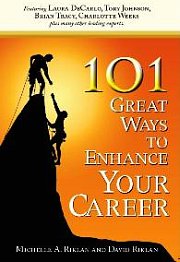
3 years ago, I was invited to participate as a contributing author together with 100 other career experts to create a book called 101 Great Ways to Enhance Your Career. In my chapter, Work Attitude, I discuss how you need to define your attitude at work as critical step to career success. You will be getting career advice up close an personal from some of the best people in their fields like Brian Tracy.
101 Great Ways to Enhance your Career Today!
Over 100 of the World's Leading Career Experts have joined together to give you the complete collection of 101 insider secrets that show you how to instantly and positively enhance your career! In this new book, experts including Tory Johnson, Laura DeCarlo, Brian Tracy, Charlotte Weeks, Long Yun Siang will give you quick, simple and proven Career secrets. To learn more about this special offer go here: 101 Great Ways to Enhance your Career
Learn & Grow: Join Our Newsletter
What's Hot
Every month, we bring you new articles based topics suggested by you. We hope to be able to give you tips and suggestions, and provide answers to your questions that you will find helpful.
Being Happy at Work – 6 Tips to Be Happy at Work
Create Time – How To Get More Time In Your Day at the Office
Pursue Your Dreams – 7 Things to Keep in Mind and Do
Great Day at Work – How to Achieve a Happy Day at Work
Release Your Tension – How to Feel Relax Before Going to Work
Powerful Words That Keep You Motivated at Work


Start Here: The Newbies Guide
If you are new to this site and don't know where to start, start here by reading our most read articles.
Definition of Success?
How To Get Promoted
Define Your Attitude
Why Is Time Management Important?
Work Attitude Behavior & Work Behavior Attitude?
What Job Suits Me?
Attitude At Work: When People Don’t Like You
Positive Thinking In The Workplace
Personal Goal Setting
How To Find Your Dream Career
Positive Attitude in The Workplace
Define Leadership
How To Move Up The Corporate Ladder
Developing Leadership Skills At Work
Developing Positive Attitude At Work